
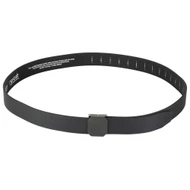
Gun Belts, Battle Belts and Magazine Pouches: Building a Carry Setup
Posted by D&R Sports Center on Nov 13th 2026
A holster gets all the attention, but the belt and the magazine pouch decide whether a carry setup actually works. A floppy belt lets the gun sag and print. A pouch cut for the wrong magazine either rattles loose or fights you on the reload. And a pouch with a 1.5-inch loop will not go on a 2.25-inch duty belt no matter how hard you push. Work through these decisions in order and you end up with one rig where every piece fits every other piece.
1. Start with the belt, because everything hangs on it
A holster and two loaded magazines put real weight on a couple of points of a strip of material. A dress belt rolls and twists under that load, and the gun tips away from your body. A purpose-built gun belt is stiff enough to hold the holster upright and close, so the draw is the same every time.
There are four families of belt, and the right one depends on how you carry, not on which looks toughest:
| Belt type | Typical width | Built for | How gear attaches | Examples in our range |
|---|---|---|---|---|
| EDC gun belt | 1.5 in | Everyday concealed carry, through pant loops | Holster and pouch loops or clips | Safariland EDC NexBelt, DeSantis B12 |
| Duty belt | 2 to 2.25 in | Uniformed and open carry, worn over an inner belt | Belt loops, secured with keepers | DeSantis M20, BLACKHAWK 2in Web Duty Belt |
| Rigger's / battle-style belt | 1.75 to 2.25 in | Range, training and field use with rifle gear | Clips, loops or MOLLE-compatible pouches | BLACKHAWK CQB/Rigger's Belt |
| Competition belt | 1.5 to 1.75 in | USPSA, IDPA and similar matches | Locking forks and plates, or adjustable loops | Safariland 032 ELS |
2. Match belt width to every loop and clip you own
This is the mistake we see most at the counter. Belt loops and clips on holsters and pouches are cut for a specific width, and the common sizes are 1.5, 1.75, 2 and 2.25 inches. A loop that is too small will not go on. A loop that is too big lets the pouch slide and tilt, so the magazine is never quite where your hand expects it.
Read the width on every product page before you buy. Our own range shows how much it varies: the Mission First Tactical Glock 19 pouch ships with a 1.5-inch belt loop; the L.A.G. Tactical M.C.S. single carriers come with clips for belts up to 1.75 inches; the DeSantis A01 leather pouches take belts up to 1 3/4 inches; and the Safariland 73 and 775 are built for 2.25-inch duty belts. Pick the belt first, then buy everything else to that width.
Also check your pants: most casual pants and jeans take a 1.5-inch belt comfortably and many take nothing wider, which is why 1.5 inches is the concealed carry standard.
3. Size the belt for how you carry
An inside-the-waistband holster and a magazine carrier take up room inside your pants, so a gun belt usually needs to be longer than your everyday belt. A common rule of thumb is to add about two inches to your pant size for IWB carry, but holster thickness and body shape vary, so check the maker's sizing chart and measure with your holster in place if you can.
Fixed-hole leather belts like the DeSantis B12 and the DeSantis Econo are sold by size, so measure carefully. Duty belts like the M20 and BLACKHAWK's padded belts come in Small through XL bands; the BLACKHAWK Ergonomic Padded Duty Belt, for example, lists Large as 38 to 42 inches. If your weight changes or you switch between IWB and OWB, a belt with fine adjustment solves the problem: the Safariland EDC NexBelt adjusts in 1/4-inch increments, one-handed, up to 50 inches.
4. Duty belts: the two-belt system and keepers
A full duty rig is too heavy for one belt through the trouser loops. The standard answer is two belts: a thin inner belt through the loops with hook material facing out, and an outer duty belt lined with loop material, so the two lock together and the rig moves with your body instead of riding up or rotating.
The DeSantis M20 is a 2 1/4-inch padded 1050D ballistic nylon belt with a heavy polymer stiffener and a tri-release buckle, designed to work with the hook-lined DeSantis N19 inner belt. BLACKHAWK's Reinforced 2in Duty Belt and Ergonomic Padded belt use the same loop-backing approach with a BLACKHAWK inner belt sold separately.
Keepers finish the job. They wrap around both belts, usually either side of the holster and pouches, and stop gear from sliding. Buy them for your exact belt width: BLACKHAWK makes keepers for 2.25-inch duty belts and a set for 2-inch belts, four to a pack. For retention holsters to pair with a duty belt, see our guide to duty holster retention levels.
5. Battle belts and rigger's belts: what they are and how pouches attach
A battle belt is a load-bearing belt for rifle work: a pistol holster, two or three rifle magazines, a pistol magazine or two, and often medical gear. It is set up for training, competition or field use rather than concealment.
Pouches attach in one of three ways. MOLLE (the PALS webbing system) uses rows of 1-inch webbing on the belt or carrier; a pouch with matching straps weaves in and out of the rows and locks down solid. Clips and loops slide over the belt itself, which is quicker to move around but depends on matching the belt width. Locking systems such as Safariland's ELS use a fork on the pouch and a receiver plate on the belt so gear can be swapped in seconds.
Our current range covers the belt end of this with the BLACKHAWK CQB/Emergency Rescue Belt, a rigger's-style belt on 1.75-inch webbing with parachute-grade buckles and adapters and hook-and-loop to secure the running end, and the BLACKHAWK Modernized 2.25in Military Web Belt with side-release buckles. Because the CQB belt is 1.75-inch webbing, it pairs naturally with pouches that clip on to belts up to 1.75 inches, such as the L.A.G. M.C.S. line. For MOLLE-platform loadouts there are dedicated MOLLE pouches like the BLACKHAWK S.T.R.I.K.E. single M4/M16 pouch, which weaves onto S.T.R.I.K.E. or PALS/MOLLE webbing, and the GBRS Group double pistol pouch, which is MOLLE and belt compatible.
One trap: a MOLLE pouch needs MOLLE webbing to mount to. It will not hang properly from a plain web belt unless the pouch also offers a belt option, so check how each pouch mounts before you build the list.
6. Pick the pouch material: Kydex, polymer, laminate, nylon or leather
- Kydex and other thermoformed plastics are molded to the magazine, hold their shape for one-handed reinsertion, and usually have a screw to adjust retention. The Crucial Concealment Covert pouches are .080 Kydex, and the L.A.G. M.C.S. and DeSantis Quantico are Kydex too.
- Injection-molded polymer and nylon are tough and consistent. The L.A.G. M.C.S. Pro is injection-molded nylon that L.A.G. describes as more temperature resistant and stronger than Kydex, with adjustable retention and a flared opening; one carrier fits a wide range of full-size 9mm/40 magazines.
- Laminates such as SafariLaminate (Safariland) and molded CORDURA (BLACKHAWK Duty Gear) are the duty-gear standard: rigid, scuff resistant and finished to match a duty holster.
- Soft nylon, laminate and elastic pouches like the GBRS Group designs are light and quiet, collapse when empty, and suit MOLLE platforms.
- Leather is quiet, comfortable against the body and looks right with a leather holster and belt. It relies on a tension device or a snap rather than molded fit, so look for adjustable tension; the DeSantis A01 has a fully adjustable dual tension device.
7. Open top, flap or elastic: how the magazine is retained
Almost every modern pistol pouch is open top: the magazine sits exposed and is held by friction, usually set with a tension screw. That gives the fastest grab and allows one-handed reinsertion. The trade-off is that friction has to be set properly. Too loose and the magazine can work out when you sit, run or go prone; too tight and it drags on the draw. Set it, then test it with an empty magazine: jump, bend over and roll on the ground.
Flap and snap closures are slower but keep debris out and the contents in. Revolver carriers are the classic example: the DeSantis Second Six holds an HKS 10A or 36A speedloader split over the belt to reduce bulk, and DeSantis notes the loader will not fall out when the flap is unsnapped.
Elastic and bungee retention, like the 3-inch heavy poly elastic and removable bungee on the GBRS Group single pouch, grips a range of magazine shapes and gives a smooth draw and easy reinsertion.
8. Fit the magazine, not just the gun
Magazine pouches fit magazines, and the label tells you which family. A pouch for double-stack 9mm/.40 will not hold a single-stack Shield or 1911 magazine securely, and a single-stack pouch will not accept a double-stack magazine at all. Some pouches are cut for one model, like the L.A.G. M.C.S. for Glock 43 and M&P Shield; others cover a family, like the DeSantis A01 for Glock 17/19/22/23.
Watch for the in-between magazines. The SIG P365 and Springfield Hellcat use narrow, staggered magazines that sit between single and double stack, and they get their own pouches: the Crucial Concealment Covert for Hellcat and P365 and the DeSantis Persuader for P365, Kimber R7, Hellcat and Shield Plus. The Glock 43X and 48 have their own slimline magazine too; the Covert for Glock 43X/48 is made for it. 2011-pattern magazines are wider still; L.A.G. notes its double-stack 9/40 M.C.S. is not for STI magazines, and Crucial Concealment makes a separate Covert for 2011 magazines.
Length matters too: a short magazine in a pouch shaped for a long one sits deep and is hard to grip. If you are unsure which magazine you have, our rifle and pistol magazine guide covers what fits what.
9. Decide where the pouch rides and which way it faces
The convention is simple: holster on the strong side, spare magazines on the support side, so your support hand fetches the magazine while your strong hand keeps the gun. Carry the magazine with the bullets facing forward, toward your belt buckle, so when you draw it with your index finger along the front of the magazine, it comes out already pointed the right way to go into the gun. Some pouches can be set either way; the L.A.G. M.C.S. carriers accept rounds forward or rounds backward, and ambidextrous pouches like the Crucial Concealment Covert switch sides.
For concealment, an IWB magazine carrier hides better than an OWB one, and ride height and cant (tilt) matter as much as they do on a holster. The Covert pouches adjust ride height and tilt by moving the clip and can be worn inside or outside the waistband. Some leather and duty pouches can ride horizontally for a lower profile, at a small cost in speed: the DeSantis A01 and the Safariland 73 and 775 all offer vertical or horizontal carry. Practice the reload from that exact position until it is automatic. And check your state and local laws on carry before you set up a concealed rig.
10. Pair the pouch with your holster
Your holster and pouch should agree on belt width, attachment method and finish: Kydex with Kydex for IWB, leather with leather on a leather belt, laminate or molded CORDURA on a duty belt.
For appendix carry there is another option: a holster with an integrated magazine carrier, sometimes called a sidecar. The DeSantis Pipe Hitter for the Glock 19/19X/23 is a right-hand Kydex appendix holster with an integral mag pouch and C-style clips that adjust for height and cant. Safariland's Incog-X for Glock 17/19, designed with Haley Strategic, comes with a magazine caddy and works with red dot sights mounted on the slide behind the ejection port. Both put the gun and the reload in one place.
If your pistol wears a light, the holster must be made for that exact gun and light combination. The Incog-X for SIG P365/X/XL with Light fits the Streamlight TLR-7 Sub and Nightstick TCM-365. Our weapon light guide explains the light side of that decision, and the full range is in holsters, with the concealment side covered in how to choose a concealed carry holster.
Our Picks
Our recommendations for the most common needs, all from our magazine pouches and belts range.
Belts
- Best everyday carry belt: Safariland EDC NexBelt 1.5in Nylon Gun Belt. Stiff high-density nylon with a water-repellent liner, and one-handed 1/4-inch adjustment up to 50 inches.
- Best leather gun belt: DeSantis B12 Plain Lined Leather Gun Belt. Extra-heavy premium saddle leather with suede lining and a removable buckle, 1.5 inches wide, in black or tan.
- Best budget carry belt: DeSantis Econo Gun Belt 1.5 in. Bonded leather and synthetic, about 3.5mm thick, originally designed as an under-belt for NYPD officers.
- Best duty belt system: DeSantis M20 Nylon Duty Belt 2.25 in with the DeSantis N19 inner belt. Padded ballistic nylon with a polymer stiffener and tri-release buckle, anchored by a hook-lined inner belt.
- Best simple 2-inch duty belt: BLACKHAWK 2in Web Duty Belt. Double-layer nylon web with a triple-retention buckle and molded keepers.
- Best rigger's-style belt for range and field: BLACKHAWK CQB/Emergency Rescue Belt. 1.75-inch webbing with parachute-grade buckles and adapters, which suits 1.75-inch clip-on pouches.
- Best for ELS competition rigs: Safariland 032 ELS Competition Belt. Two rows of pre-cut holes along the full length for ELS 35 receiver plates, so pouches with ELS 34 forks attach and detach quickly.
Concealed carry magazine carriers
- Best IWB/OWB carrier for Glock 9mm/.40: Crucial Concealment Covert Magazine Pouch for Glock 9MM/40S&W. Thin .080 Kydex, fully ambidextrous, with adjustable retention, ride height and tilt.
- Best for SIG P365 or Springfield Hellcat: Crucial Concealment Covert for Hellcat and P365. For a polymer option that also takes Kimber R7 and Shield Plus magazines, the DeSantis Persuader works IWB or OWB.
- Best for Glock 43X/48: Crucial Concealment Covert for Glock 43X/48. Made for the slimline magazine and also listed for Taurus G3C magazines.
- Best for Glock 43 or M&P Shield: L.A.G. Tactical M.C.S. Single for Glock 43 and M&P Shield. Kydex with 1.75-inch clips, rounds-forward or rounds-backward, and a lifetime warranty.
- Best appendix holster with mag pouch for a Glock 19: DeSantis Pipe Hitter for Glock 19/19X/23. Gun and spare in one Kydex rig.
- Best holster and caddy for a red-dot Glock 17/19: Safariland Incog-X for Glock 17/19. Suede-wrapped Boltaron, adjustable clips and a magazine caddy.
OWB, leather and duty pouches
- Best OWB single for Glock 19: Mission First Tactical Magazine Pouch for Glock 19. Flared opening, adjustable retention and a 1.5-inch belt loop.
- Best double for SIG P320 or M&P 9mm: Mission First Tactical Double Magazine Pouch for Sig P320/M17/M18 and M&P 9mm. Two spares in a slim, low-profile pouch with adjustable retention. Glock owners have the matching MFT double for Glock 9/40.
- Best leather double for Glock: DeSantis A01 Double Magazine Pouch for Glock 17/19/22/23. Snap-to-the-belt leather with dual tension adjustment.
- Best for 1911 and single-stack .45: DeSantis A01 Double for Single Stack 10mm/45 and Shield 9/40 in leather, or the Kydex L.A.G. M.C.S. Single for Single Stack 45ACP, listed for the 1911, XDS .45 and Shield .45.
- Best paddle pouch for quick on and off: Safariland 074 Single Magazine Pouch for Glock 17. SafariLaminate with a molded polymer paddle and adjustable tension, for belts up to 1.5 inches.
- Best duty double: Safariland 73 Open Top Double Magazine Pouch. For 2.25-inch duty belts, with a tension screw and vertical or horizontal slots. For a molded CORDURA rig, the BLACKHAWK Duty Gear Molded Double fits most metal or polymer double-stack 9mm/.40 magazines.
- Best duty triple: Safariland 775 Slimline Triple Magazine Pouch. Three magazines on a 2.25-inch belt, vertical or low-profile horizontal.
- Best for revolver carriers: DeSantis A35 Second Six Speedloader Pouch. For HKS 10A or 36A loaders.
Rifle, battle belt and competition
- Best belt-mounted AR-15 magazine pouch: L.A.G. Tactical M.C.S. Single Rifle Magazine Pouch. Kydex, fits AR-15 and .223 AICS-type magazines, 1.75-inch clips.
- Best MOLLE rifle magazine pouch: BLACKHAWK S.T.R.I.K.E. Single M4/M16 Magazine Pouch. Weaves onto PALS/MOLLE webbing and has three rows of external webbing for more pouches.
- Best for locking-system rigs: Safariland Model 774 Rifle Magazine Pouch. Ambidextrous SafariLaminate with adjustable angle and retention. Note that this version is listed as having no belt loop, so plan how you will mount it before you order.
- Best pistol pouch for a battle belt or plate carrier: GBRS Group Double Pistol Magazine Pouch. Laminate and elastic, fits most double-stack pistol magazines on MOLLE or belt.
- Best competition pistol pouch: Safariland 773 Competition Magazine Pouch. Adjustable to any angle within a 90-degree range, with a closed-in front to help retain the magazine.
- Best do-everything pistol carrier: L.A.G. Tactical M.C.S. Pro Nylon Single. One carrier for a wide range of full-size 9mm/40 magazines, adjustable retention, and carriers can be banded together into multi-mag rigs.
Putting it together
Most setups are one of three builds: a stiff 1.5-inch gun belt with an IWB holster and carrier for concealed carry; an outer duty belt over an inner belt with keepers and matching pouches for duty; or a rigger's belt or MOLLE platform with rifle and pistol pouches for the range and field.
Browse by brand once you know which build you are making: DeSantis, Safariland, BLACKHAWK, L.A.G. Tactical, Crucial Concealment, Mission First Tactical and GBRS Group. Spares to fill them are in magazines. And if you are not sure a pouch will fit your magazine or your belt, ask us before you order.